
Comprehensive English Urdu Dictionary with Advance Search
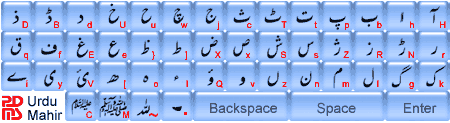
Show Keyboard
 |
611 narrate (verb active)
نقل کرنا۔ روایت کرنا۔ بیان کرنا۔ برنن کرنا
612 willer (Noun)
چاہنے والا۔ خواہش کرنے والا
613 manginess (Noun)
کھجلی کی حالت۔ کھرسیلاپن
614 unlike (adjective)
ان میل۔ غیر مشابہ۔ ناموافق۔ ناہموار۔ غیر متماثل
unlike quantities
مقادیر غیر متماثل
615 centipede (Noun)
کھنکھجورا ۔ کنگوجر ۔ کان سلائی ۔ ہزار پا
616 liberal (Noun)
وہ شخص جس کی رائے انتظام ملک کی بابت امور فائدہٴ عام کی ترویج میں ہو۔ طرفدار فائدہٴ عام
617 abstain (adjective)
باز رہنا ۔ الگ رہنا ۔ بچنا ۔ چھوڑنا ۔ پرہیز کرنا ۔ حذر کرنا
618 consequential (adjective)
گربھی ۔ گھمنڈی۔ابھیمانی
a consequential person
ابھیمانی پُرش ۔ مغرور آدمی
619 precocious (adjective)
پیش از وقت۔ بے موسم۔ قبل از وقوع۔ اگیتی۔ پیش رس
620 impress (verb active)
1. stamp upon
نقش کرنا۔ نشان کرنا۔ ثبت کرنا
2. stamp
چھاپنا۔ ٹھپا کرنا۔ مہر کرنا
3. fix deeply
چت میں بٹھانا۔ دل نشین کرنا۔ ذہن نشین کرنا۔ خاطر نشین کرنا
4. take by force
بیگار میں پکڑنا۔ زبردستی خدمت لینا۔ بزور کام لینا
Comments
Use search for جھکڑ
http://urduseek.com/dictionary?index=1&efilter=%D8%AC%DA%BE%DA%A9%DA%91&find=Find&R1=English&sCriteria=1
ہندی
"Jhakr" sounds like Hindi. you might wanna try wordanywhere.com for those words.
Allah-Hafiz?
Why do some of us Pakistanis say Allah-Hafiz now? Why don't they just use Urdu and say خدا حافظ or if they prefer Arabic use then فی رعایةالله. I think it might have been used as a way to connect people; because many muslim people of Hindustan and Bangladesh can't pronounce خ. It may be appropriate for Hindustani Muslims because their alternative would be Namaaskar, but Bangladeshis have (bhalosen). what do you think?
Allah Hafiz
Asslam-o-Alaicum, Word Khuda not an Urdu word but taken in Urdu from Persian (Farsi) In Farsi Khuda means God and being a Muslim the word Khuda, God or Bhagwan can not be accepted for Allah. Allah is the name (Ism'e Zaat) and all other 99 names are Ism'e Siffat. If you should consult with Quran through an Alim'e Quran about these small things you may get the right things about Islam and will be a good Momin. Only knowing the Arabic you cannot understand the Quran and Islam you must consul Ulma'e Haq also. Its like you consult with Doctors even you know the some remedy or medicine for your illness. You consult Wakil even you knows the laws...etc etc...
ALLAH Hafiz - Perhaps u didn't go through my comments dated 22-5
NDM
Perhaps you did not go through the latest comments "Understanding Moves Feelings" written by me on May 22, 2006. After reviewing those you can come back to this topic. Thanks
Re: ALLAH Hafiz
NDM: Please make a note that Hafiz is also an Arabic word and has been used even in the Holy Quran many times. It is better to use Quran-word than persion or of anyother language. Thank you.
Arabic
Yes, the Qur'an is written in the Arabic language however. And in Arabic you wouldn't put the words together like that (Allah-Hafiz). So if it is better to use the Quranic word then we should use فی رعایة الله یا فی امان الله. And on another note, we should also then all learn Arabic so to understand and contemplate what Allah has sent to us. What else is this world for? Know so you may obey.
Understanding moves the feelings
NDM: Hafiz is an Urdu word as well. There are many Urdu words which have been taken from Arabic with similar meanings. Generally, Hafiz means protector or guardian in both Quranic Arabic and Urdu. ALLAH Hafiz is commonly known by all; whereas fi amaan ALLAH is understood only by a fixed group of people. It is said: Do not utter until or unless you yourself know what you are saying. I know most of people don't know the meaning of "fi" and then "amaan". Most often they use these words without understanding or if they understand the addressees usually don't understand. So, in short the words are not operative and do not move the feelings unless we understand them. A poem of Allama Iqbal can only be impressive for those who understand.
إِنْ كُلُّ نَفْسٍ لَمَّا عَلَيْهَا حَافِظٌ
There is no soul but has a protector over it.
Al-Qur'an, 086.004 (At-Tariq )
When we say "aap ka ALLAH Hafiz" – it means ALLAH (SWT) is yr protector. Or the responsibility of yr protection is given to ALLAH (SWT) – and almost every speaker as well as addressee knows and understands this.
It is our (Muslims') great misfortune that we read Quran again and again without understanding. On the other hand if we read English or Persian we know what we are speaking about. What will we tell others when we ourselves don't know about what we utter.
This is the greatest and foremost Sunnah to read Qur'an with understanding. Never Prophet (SAW) or his sahabahs recited like we do (recite) in India, Pakistan or Bangladesh. This is the basic reason that our lives are not changing. The importance of understanding can be judged from the following verse:
In Surah Hashr it is said:
لَوْ أَنْزَلْنَا هَذَا الْقُرْآنَ عَلَى جَبَلٍ لَرَأَيْتَهُ خَاشِعًا مُتَصَدِّعًا مِنْ خَشْيَةِ اللَّهِ وَتِلْكَ الأمْثَالُ نَضْرِبُهَا لِلنَّاسِ لَعَلَّهُمْ يَتَفَكَّرُونَ
Had We sent down this Qur'an on a mountain, verily, thou wouldst have seen it humble itself and cleave asunder for fear of Allah. Such are the similitudes which We propound to men, that they may reflect.
Al-Qur'an, 059.021 (Al-Hashr)
May ALLAH (SWT)increase us in our knowledge. Ameen!
Allah Hafiz
Salam,
More and more Muslims are opting to saying "allah Hafiz" instead of "Khuda Hafiz" because Allah is the name of the one God that Muslims have belief in. "Khuda" simply means "god". It can be any god.
Although, I say Allah Hafiz, but I don't have a problem with Khuda Hafiz becasue a Muslim will mean Allah when he says Khuda.
response
Wa'laykum Asalaam,
Yes, it depends on your intention however. Since Khuda is used only by Muslims, they know only the One God. You say "it can be any god", but there is only One God (as you say); it contradicts. btw, Jewish and Christian Arabs also use Allah. Just a thought.
Pages